Popular Chemistry Online

Link ad

Followers

Tuesday, January 18, 2022

HYDROGEN BONDING IN ORGANIC COMPOUNDS

In 1920 Latimer and Rodebush introduced the idea of  "hydrogen bond" to explain the nature of association in liquid state of substances like water, hydrogen fluoride, ammonia and formic acid, etc. In a hydrogen compound, when a hydrogen atom lies between two atoms having high electronegativities, it shows a unique property of forming a bond or a bridge between them, holding one of the atoms by a covalent bond and other by purely electrostatic forces (dipole-dipole attraction). This chemical combination between highly electronegative atoms of small atomic radius, such as F and N through a hydrogen bond is referred to as Hydrogen bond or Hydrogen bridge.

Hydrogen bond is defined as "an electrostatic attractive force between the. covalent bonded hydrogen atom of one molecule and an electronegative atom (such as F, 0, N) of the 'other molecule
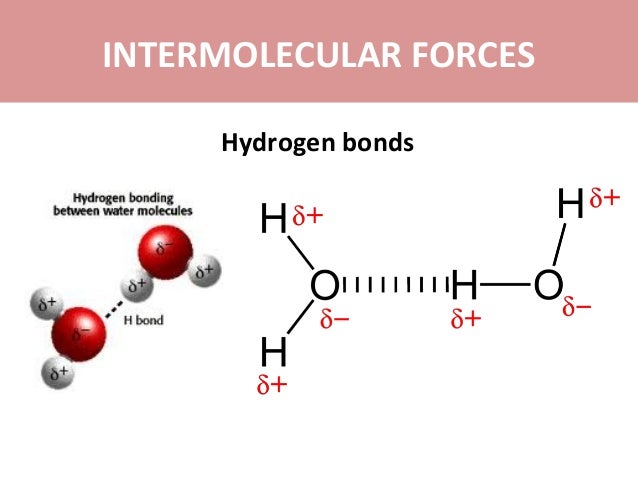

Nature and Importance of Hydrogen Bonding 

 (i) Hydrogen bond is merely an electrostatic force rather than a chemical bond. 

  (ii) Hydrogen bond never involves more than two atoms. 

 (iii) Bond energy of hydrogen bond is in the range of 3 to 10 Kcal/mol or 10 to 40 kJ/moI, i. e., about 1/10th the energy of a covalent bond. . 

 (iv) With the increase of electronegativity of the atom to which hydrogen is covalently linked, the strength of' the hydrogen bond increases. 

 (v) All the three atoms in X -H- - -X lie in a straight line. 


Decreasing order of electronegativity of F>O>CI=N>Br>C>H

Electronegativity of an atom is a measure of its power to attract electrons that it is sharing in a covalent bond. 

The decreasing order of electronegativity of some common atoms which are generally encountered in organic chemistry is:

F >  O > CI= N > Br > C > H

Major sources of organic compounds

 There are two major sources of organic compounds: 

 (I) Natural and 

(II) Synthetic. 

 I) Natural

a).Plants- Carbohydrates (glucose, sucrose, starch, cellulose), acids, esters, vegetable oils, vitamins, gums, alkaloids, essential oils, perfumes, alcohol, acetone, etc. are some of the important organic compounds which are obtained from plants.

b).Animals-  Some of the important organic compounds which are derived from 'animals; are proteins, hormones, fats and urea,

 c).Fungi and microorganisms-This is the ·source responsible for the· production of hosts of useful substances like alcohols, acids, antibiotics (penicillin, streptomycin, tetracycline) 'and" vitamins by using the process of fermentation.

 c). Coal - Coal-tar obtained during destructive distillation of coal is the main source of aromatic hydrocarbons, phenols, heterocyclic compounds, dyes drugs; perfumes, etc. 

d). Natural gas and petroleum -  It is one of the major sources of organic compounds Gasoline, kerosene, lubricating oil, Vaseline, paraffin wax, etc., ate few examples which are obtained directly from petroleum by fractional distillation. Hundreds of useful organic compounds are prepared from the wide range of hydrocarbons which serve as starting materials for the synthetic reactions.

II). Synthetic Sources- More than 90% of the known organic compounds are synthetic, i.e., prepared by artificial methods. Simple organic ·compounds derived from petroleum and coal have been converted into useful products by synthetic methods.

Now-days, many of the natural products such as dyes, fibres, rubber, drugs, vitamins, etc., are prepared by synthetic reactions. 

Monday, January 17, 2022

Catenation

 Catenation is the property of atom of an element that may be defined as the self-linking of atoms of an element to form chains and rings. it depends upon the value of bond energy which is maximum in the case of carbon.

 C- C    >    Si-Si    >      S-S      >   P-P   >    N-N      >    O-O 

{ Bond energy (in Kj/mol) as 83,54,54,50,39,35 respectively}

The stability or strength of the bond decreases as the bond energy decreases hence the tendency of catenation decreases following-

C  > Si = S  > P > N > O

Vital force

Berzelius assumed that some vital force (life force) was necessary to produce organic compounds and synthesis of these compounds in the laboratory was impossible due to the absence of this vital force which only existed in living organisms. 

The vital force theory suffered the first deathblow, in 1828, when Fedrick Wohler synthesised first organic compound, urea, in the laboratory by heating ammonium cyanate (an inorganic compound). 

 NH4CNO + heat  ๐Ÿ š NH2CONH2 (Urea)


 A further blow to vital force theory was given by Kolbe, in 1845, when he synthesised acetic acid, the first organic compound, in laboratory from its elements and . later by Berthelot, in 1856, who synthesised methane.


Sunday, January 16, 2022

CONDUCTANCE OF ELECTROLYTIC SOLUTIONS

 The electrical resistance of any object is directly proportional to its  length, l, and inversely proportional to its area of cross section, A. That is,

  R =ฯl/A.

 The inverse of resistance is called conductance, G.

  G =  l/R = A/lฯ  =k A/l.

The SI unit of conductance is siemen, represented by ‘S’ or ฮฉ-1.

The inverse of resistivity is called conductivity (specific conductance) ฮบ.

FACTORS AFFECTING IONIC CONDUCTANCE

 (i) The nature of the electrolyte added.

(ii) Size of the ions produced and their solvation.

(iii) The nature of the solvent and its viscosity.

(iv) Concentration of the electrolyte.

(v) Temperature (it increases with the increase of temperature).

feature post

Important questions of biomolecules

BIOMOLECULES QUESTIONS VSA TYPE QUESTIONS (1 - MARK QUESTIONS) 1. Name polysaccharide which is stored in the liver of animals. 2. Wh...